


PlusX2: Why the Platform Isn’t Tied to One Product
The Brain Shapes Reality – What New Research Reveals About Thinking, Perception, and Change
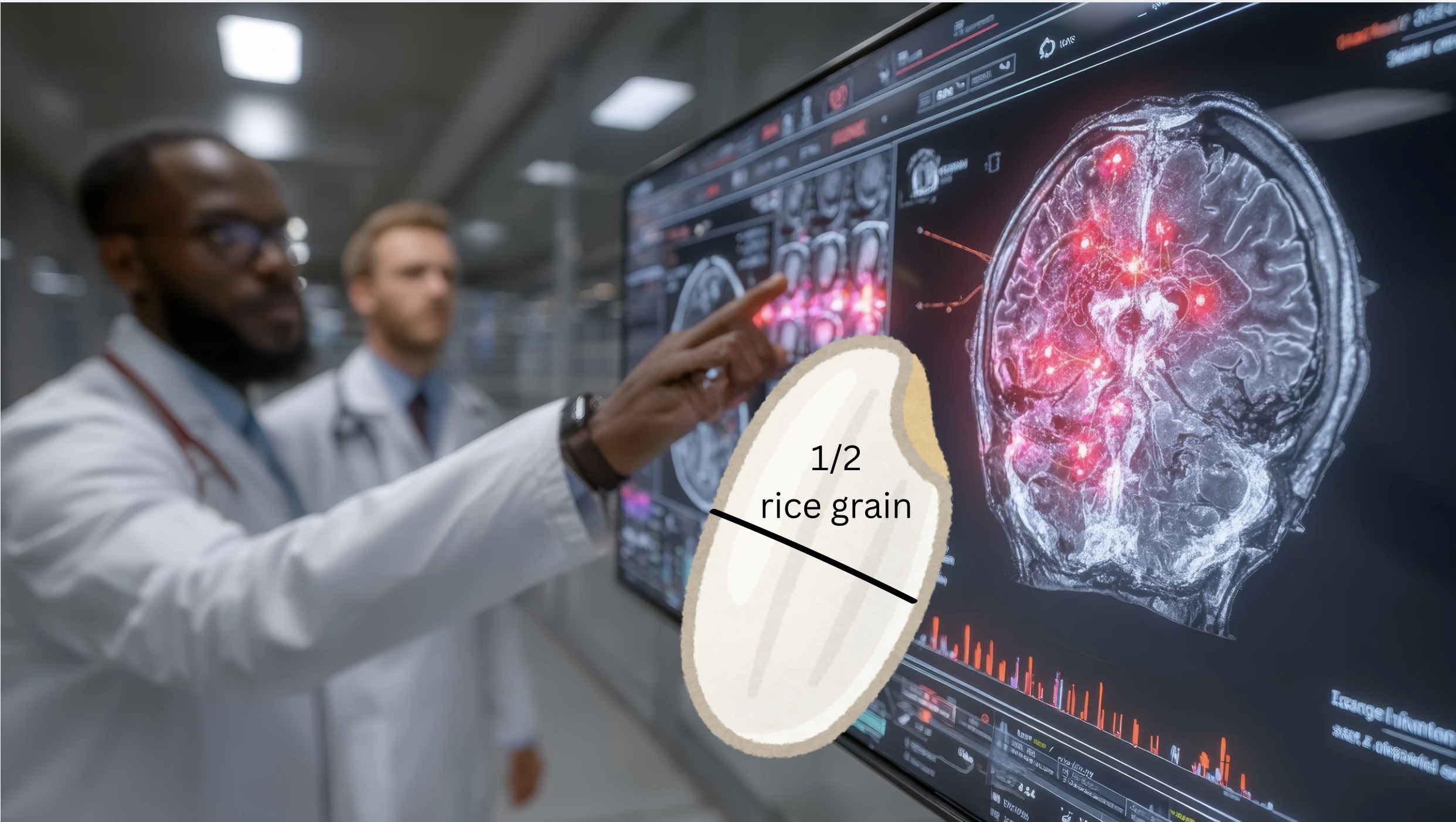
Modern brain research has reached a new milestone. Scientists mapped a tiny part of the human brain — roughly half the size of a grain of rice. For this microscopic section alone, researchers required more than a year of work and over 1.4 million gigabytes of data.
The results astonished even experienced neuroscientists:
More than 57,000 cells, around 150 million synapses, and even previously unknown structures became visible.
And this represents only one millionth of the entire brain.
To map the complete human brain with the same level of detail would require the entire amount of digital storage humanity produces in a year — along with a gigantic data center covering approximately 140 hectares.
And yet every human being carries this system inside their head.
The brain is estimated to store up to 2.5 million gigabytes of information. It processes approximately ten quadrillion operations per second while consuming little more energy than a small light bulb.
The deeper science looks, the clearer it becomes:
The human brain is one of the most complex known structures in the universe.
One discovery is especially fascinating and now scientifically well established:
The brain is adaptable.
In the past, scientists believed the brain was largely fixed. Today we know that thoughts, experiences, language, decisions, and inner images actually change the structure of our nervous system.
Whenever we think, feel, or act, billions of nerve cells communicate with one another. Connections form between them — so-called synapses. When certain thoughts or behaviors are repeated frequently, these connections become stronger.
Neural pathways are formed.
You can imagine it like a path through grass:
If people walk the same route repeatedly, a visible trail appears. Over time, the trail becomes a permanent road.
In exactly the same way, the brain develops habits, patterns of thinking, and automatic reactions.
This means:
Repeated thoughts create stable patterns.
Emotions strengthen these patterns.
Experiences leave physical traces in the brain.
Attention directs neural development.
Modern neuroplasticity research therefore reveals something remarkable:
Human beings actively influence their own biological structure through their inner orientation.
If we view the human spirit as the core of the human being, and feeling as the expression of that spirit, then an important insight emerges:
Not every thought changes us equally.
What is connected to inner feeling becomes anchored much more deeply.
Brain research confirms this connection. Emotional significance activates regions such as the amygdala — the emotional center of the brain. As a result, information is stored more strongly and linked more quickly with existing neural networks.
That is why we often remember certain moments, words, or images for decades.
Inner involvement acts like an amplifier.
Joy, enthusiasm, gratitude, or clear mental images of goals generate stronger neural activity than neutral information. Thoughts remain active longer and influence behavior more sustainably.
This is exactly where the PlusX2 approach begins.
Tools such as:
written goal setting
vision boards and dream albums
daily activity checklists
success journals
coaching and repetition
help people consciously strengthen desired patterns of thought and behavior — through deliberate activity, repetition, emotional anchoring, and focused direction.
Another fascinating area of modern research concerns the role of attention.
What a person focuses on consistently has a measurable effect on perception, decisions, and neural processes.
This explains why pessimistic people often perceive more problems, while goal-oriented and solution-focused individuals recognize opportunities more quickly.
The brain constantly filters information.
It strengthens the networks that are used most frequently.
Over time, this creates a kind of inner automatism.
The deeper research penetrates into human biology, the greater the sense of wonder becomes.
Billions of precisely connected nerve cells.
Electrical impulses. Chemical messengers. Memory. Creativity. Language. Imagination. Consciousness.
And all of this exists within an organ that consumes little more energy than a dim lamp.
Today, many scientists openly acknowledge that the complexity of biological systems goes far beyond what was once assumed.
For many people, this also opens the door once again to larger questions: order, meaning, and the origin of this astonishing structure. Here, the perfection of the Creator reveals itself.
Human beings are not helplessly trapped by their thoughts and habits.
They possess the ability to create new pathways, align inner images, and gradually transform their lives.
Because change often begins invisibly —
as a thought, a decision, an inner direction.
And eventually, it becomes reality.